Research paper

ICER 2026

Steering AI Tutors Through System Prompts:
A Crossover Study on Self-Regulated Learning
and Cognitive Engagement Scaffolds in CS1

12. August 2026, Uppsala

Maximilian Barth*, Sverrir Thorgeirsson*, Khashayar Etemadi, Juho Leinonen, Carlos Cotrini, and Zhendong Su

ETH Zurich
Steering AI Tutors Through System Prompts
12.08.26
Context
ICER 2026
1/16

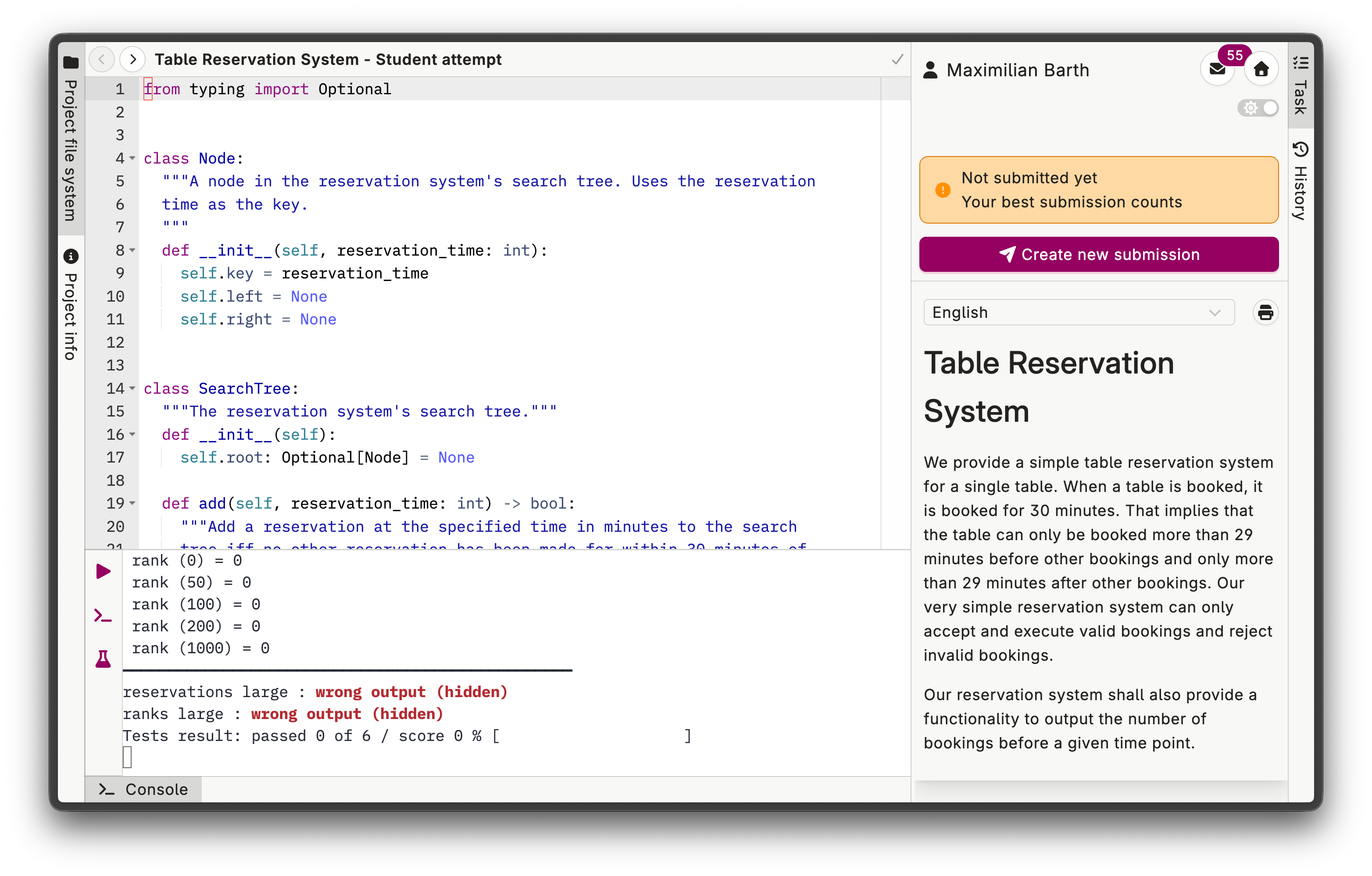
Code Expert

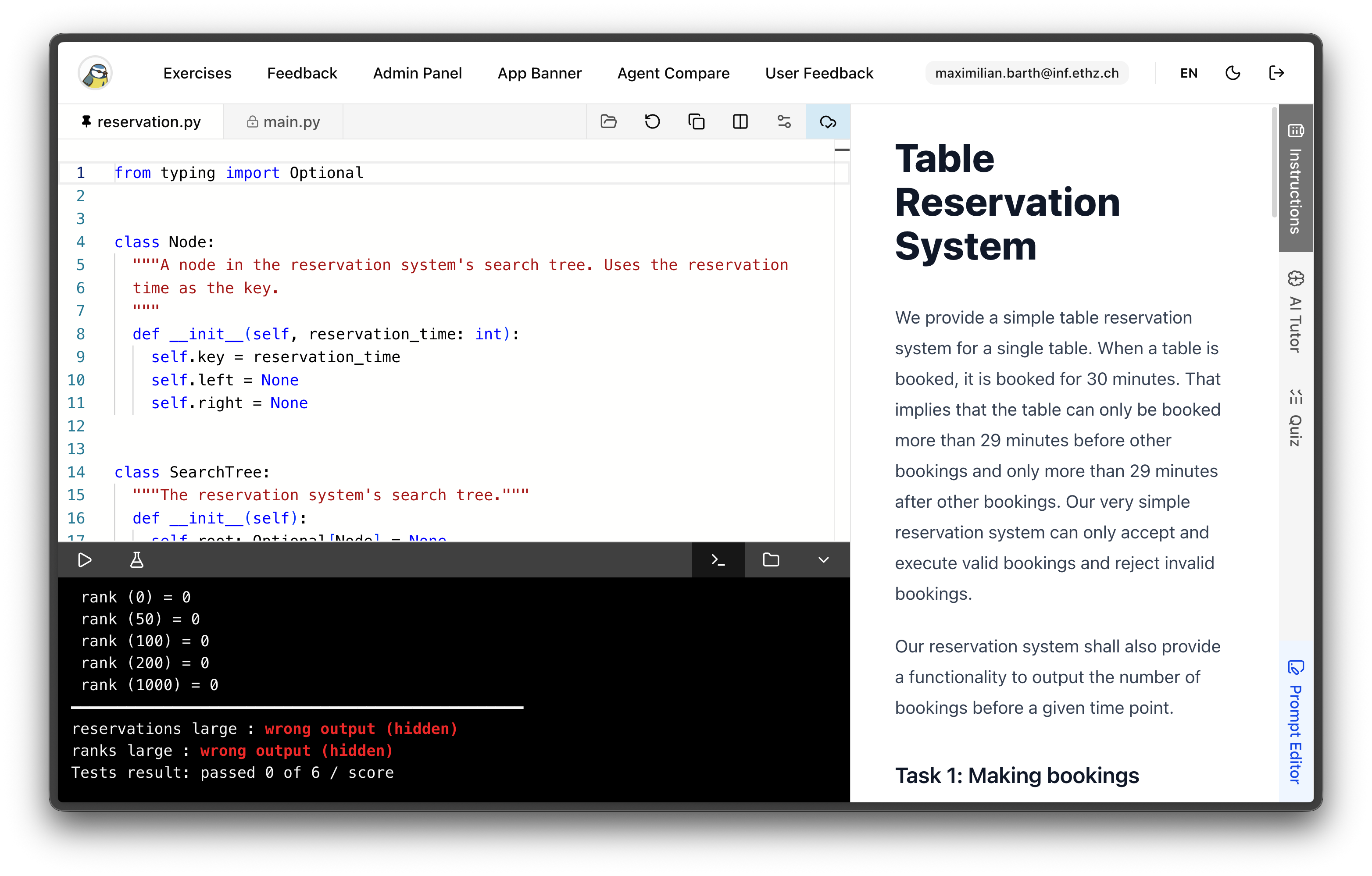
Code Expert programming homework interface
  • Used across many ETH courses
  • Programming homework
  • Bonus points for exams
  • Require considerable effort
ETH Zurich
The starting point
12.08.26
Problem
ICER 2026
2/16

Helpful is not always pedagogically helpful

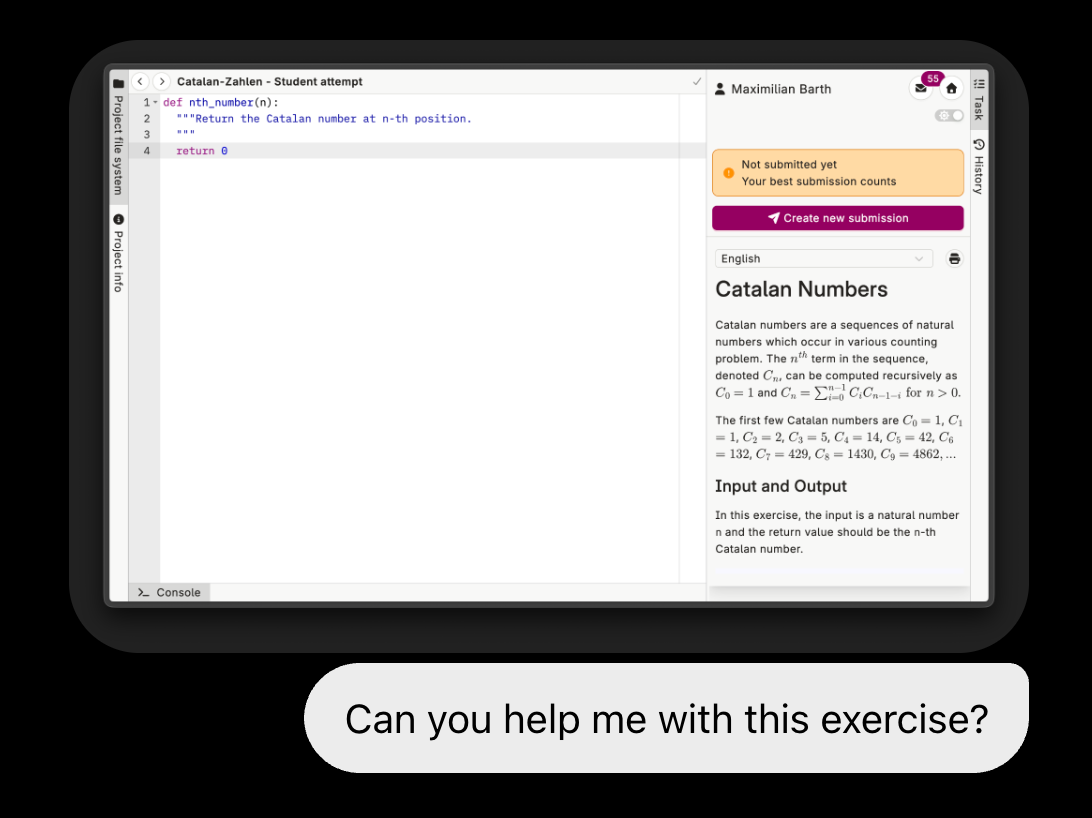
Student asking an AI assistant for help with an exercise
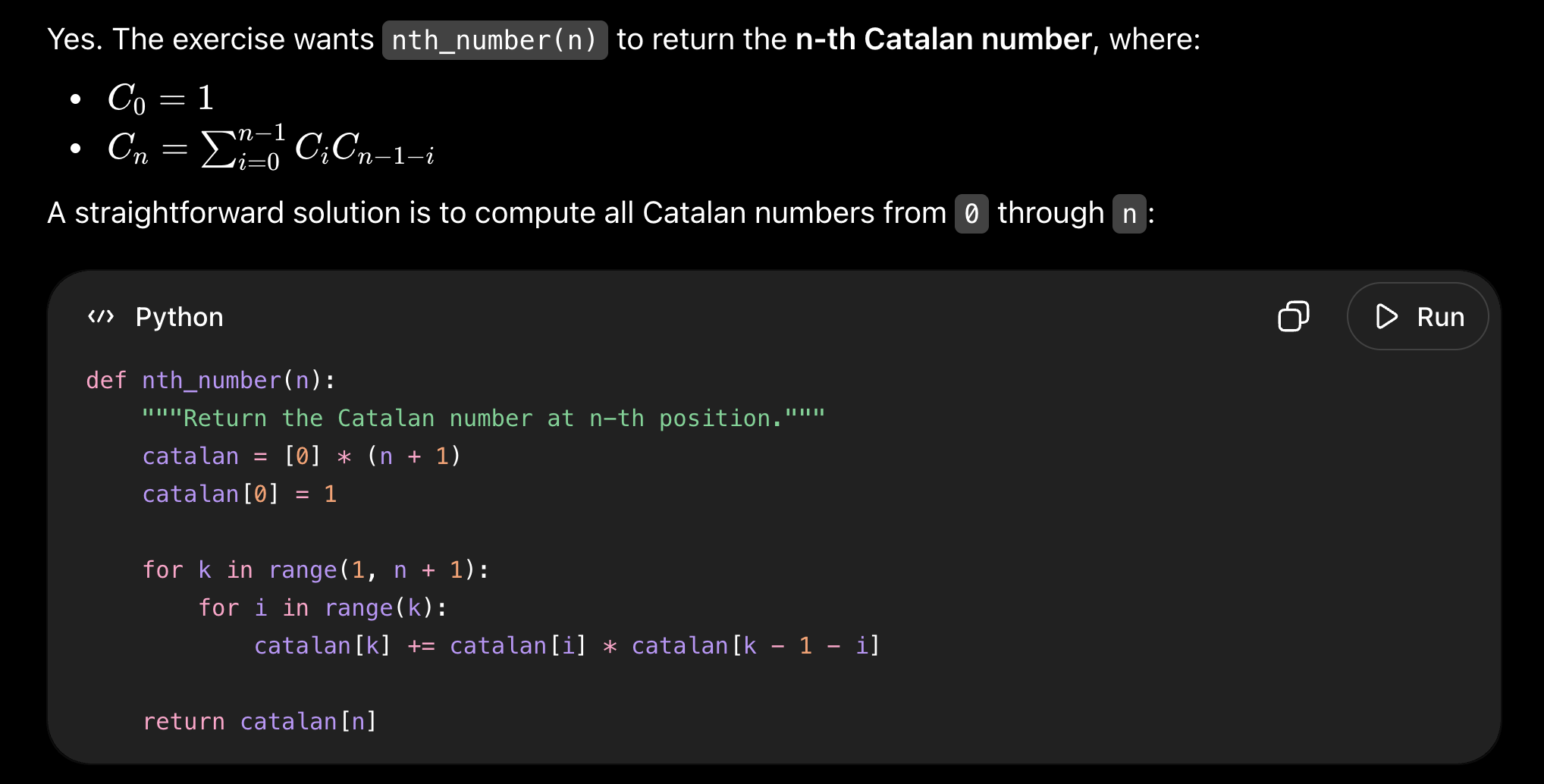
AI assistant returning a complete solution
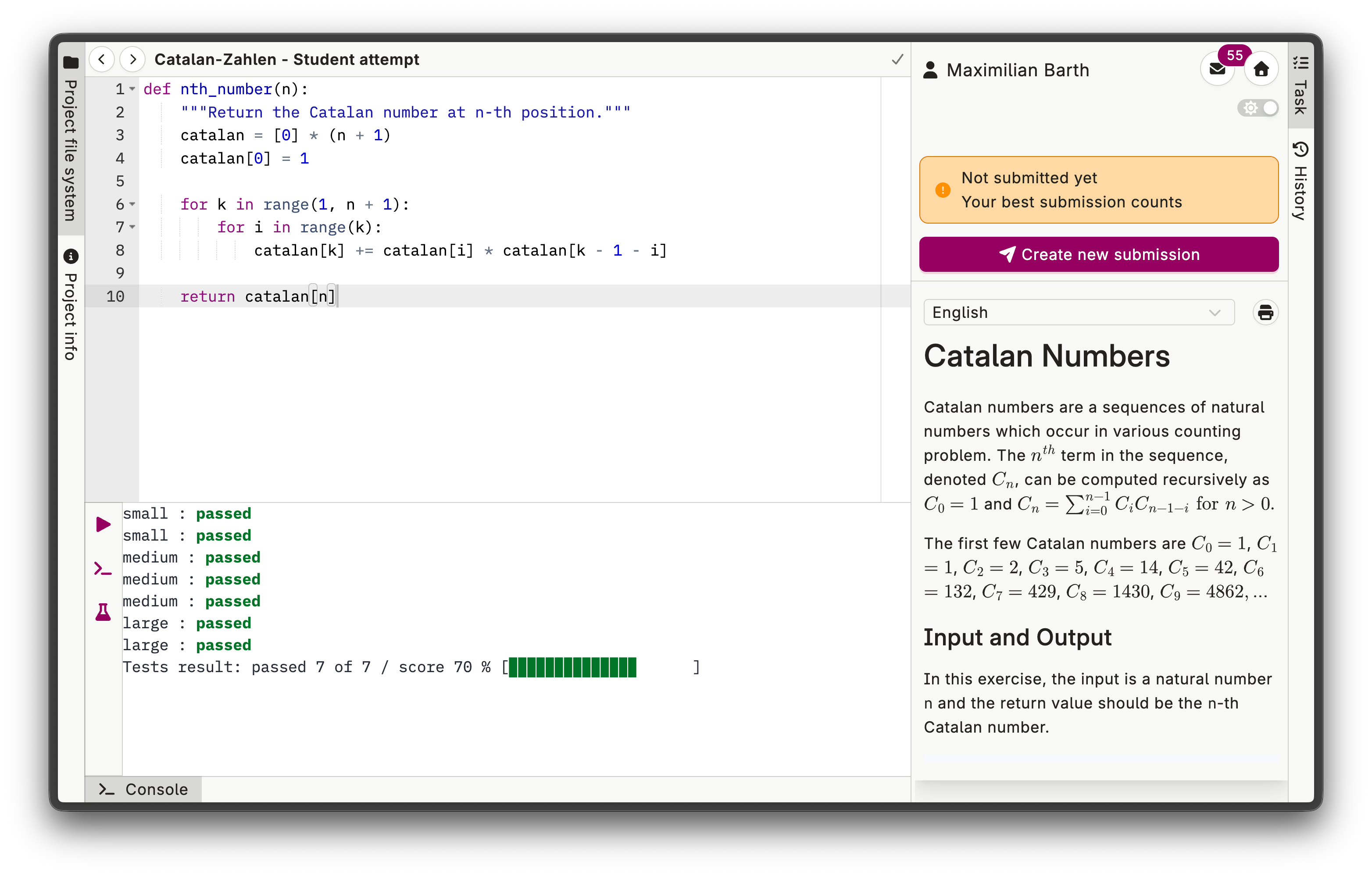
Code submission passing all tests
ETH Zurich
The pedagogical tension
12.08.26
Motivation
ICER 2026
3/16

What if every student had access to an AI tutor?

  • Guidance without giving away solutions
  • On-demand support at scale
  • Access without premium subscriptions
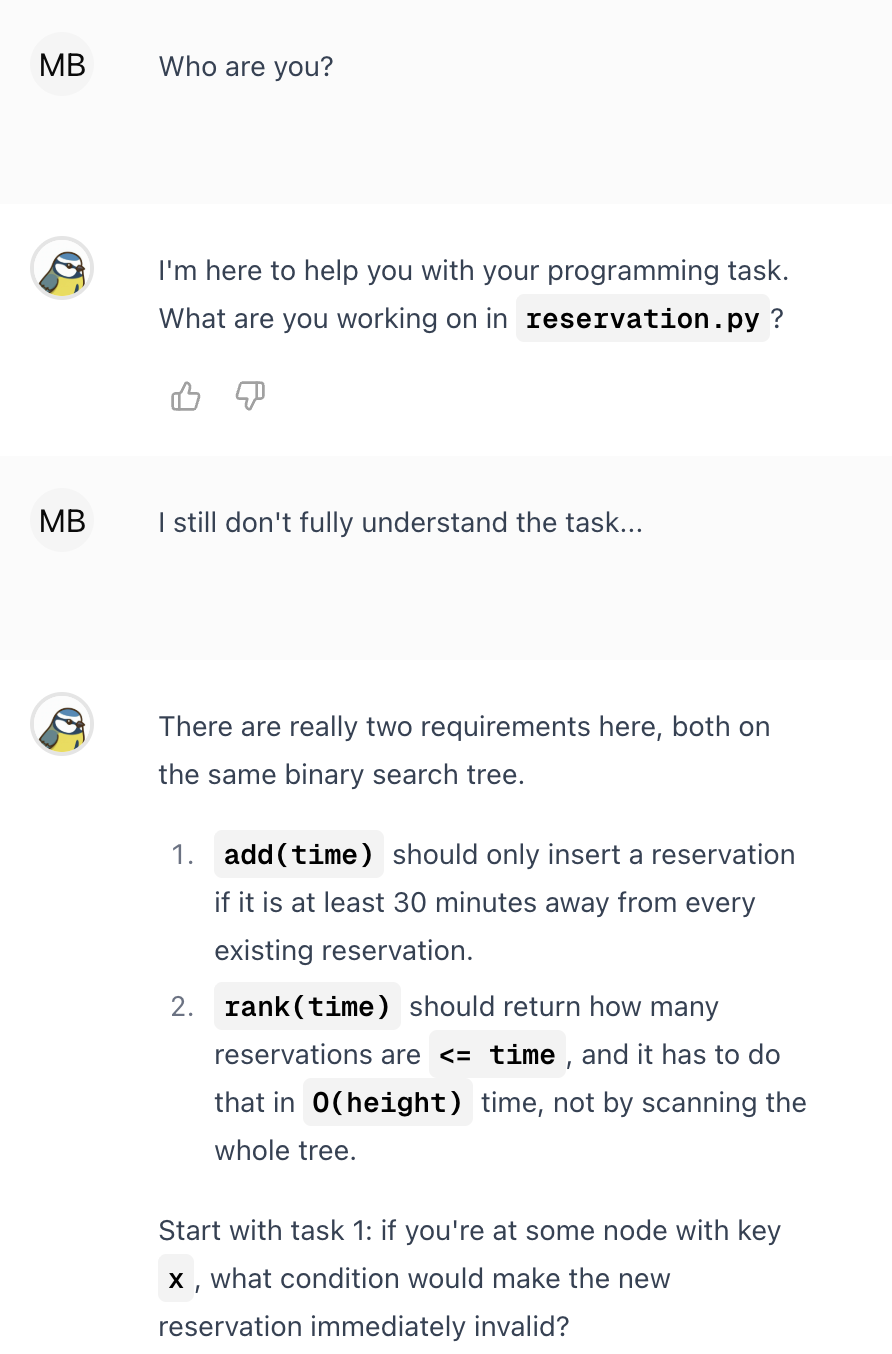
Example conversation between a student and the Ente AI tutor about a programming task
ETH Zurich
Purpose-built tutoring
12.08.26
Conditions
ICER 2026
4/16

Can established learning theory fit inside a system prompt?

ETH Zurich
Three tutor conditions
12.08.26
Interface
ICER 2026
6/16

Tutors in a familiar environment

Code Expert interface
Ente tutor interface beside a programming exercise
Code ExpertEnte
ETH Zurich
Embedded in coursework
12.08.26
Live walkthrough
ICER 2026
7/16

Demo

Yellow duck mascot
ETH Zurich
Demo
12.08.26
System
ICER 2026
8/16

About the system

Privacy & deployment:

  • Hosted at ETH
  • Swiss inference provider
  • Zero data retention

Qwen3235B-A22B-Instruct-2507

Ente yellow duck mascot
ETH Zurich
Private by design
12.08.26
Prompt design
ICER 2026
5/16

The only thing we changed was the system prompt.

Baseline tutoring instructions
Optional pedagogical strategy
Static context
Chat history
Dynamic context
User question
System prompt
Context
ETH Zurich
Prompt assembly
12.08.26
Study design
ICER 2026
9/16

A six-week crossover study

  • CS1 for engineers at ETH in C++
  • 1,500+ students
  • Recursion, DSA, OOP, memory management
  • Authentic coursework
A
B
C
D
E
F
ETH Zurich
Authentic coursework
12.08.26
Study scale
ICER 2026
10/16

Some stats

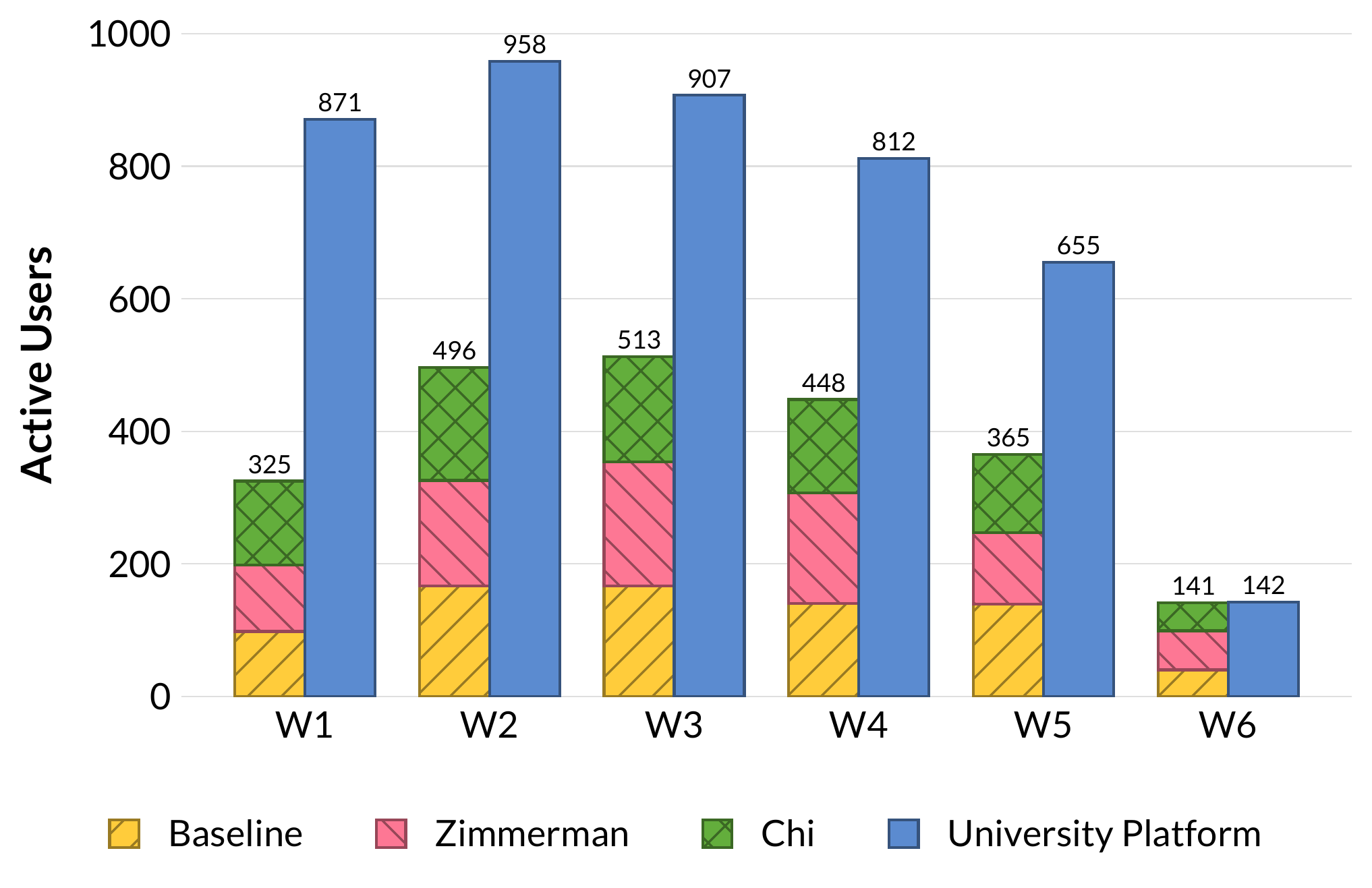
Weekly active users in the tutor conditions and university platform
87%consent rate
>49,175messages
>2,552 htime on task
>26,989code runs
ETH Zurich
Study scale
12.08.26
Measures
ICER 2026
11/16

Preregistration

Tutor response preference

  • Thumbs-up / thumbs-down reactions
  • Like ratio

Conceptual learning

  • Exercise-specific conceptual MCQ
  • Quiz success

Usability

  • UMUX-Lite: 2 items, 7-point scale

Cognitive load

  • Paas mental effort: 1 item, 9-point scale
Survey
ETH Zurich
Preregistered outcomes
12.08.26
Primary result
ICER 2026
12/16

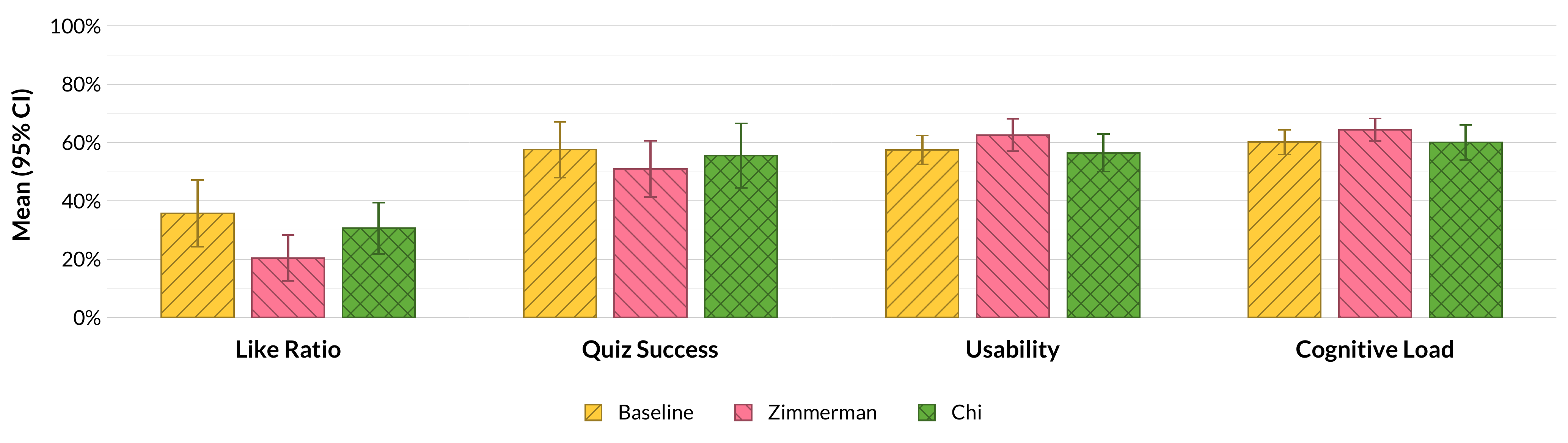
No preregistered outcome differed significantly

Grouped bars with 95% confidence intervals comparing Baseline, Zimmerman, and Chi across Like Ratio, Quiz Success, Usability, and Cognitive Load
Four outcome measures by tutor condition with confidence intervals
Mixed-effects model results for preregistered outcomes
ETH Zurich
Preregistered outcomes
12.08.26
Coding
ICER 2026
13/16

Qualitative coding

2blinded coders
1,983messages coded
80.7%agreement
ETH Zurich
Behavioral evidence
12.08.26
Exploratory result
ICER 2026
14/16

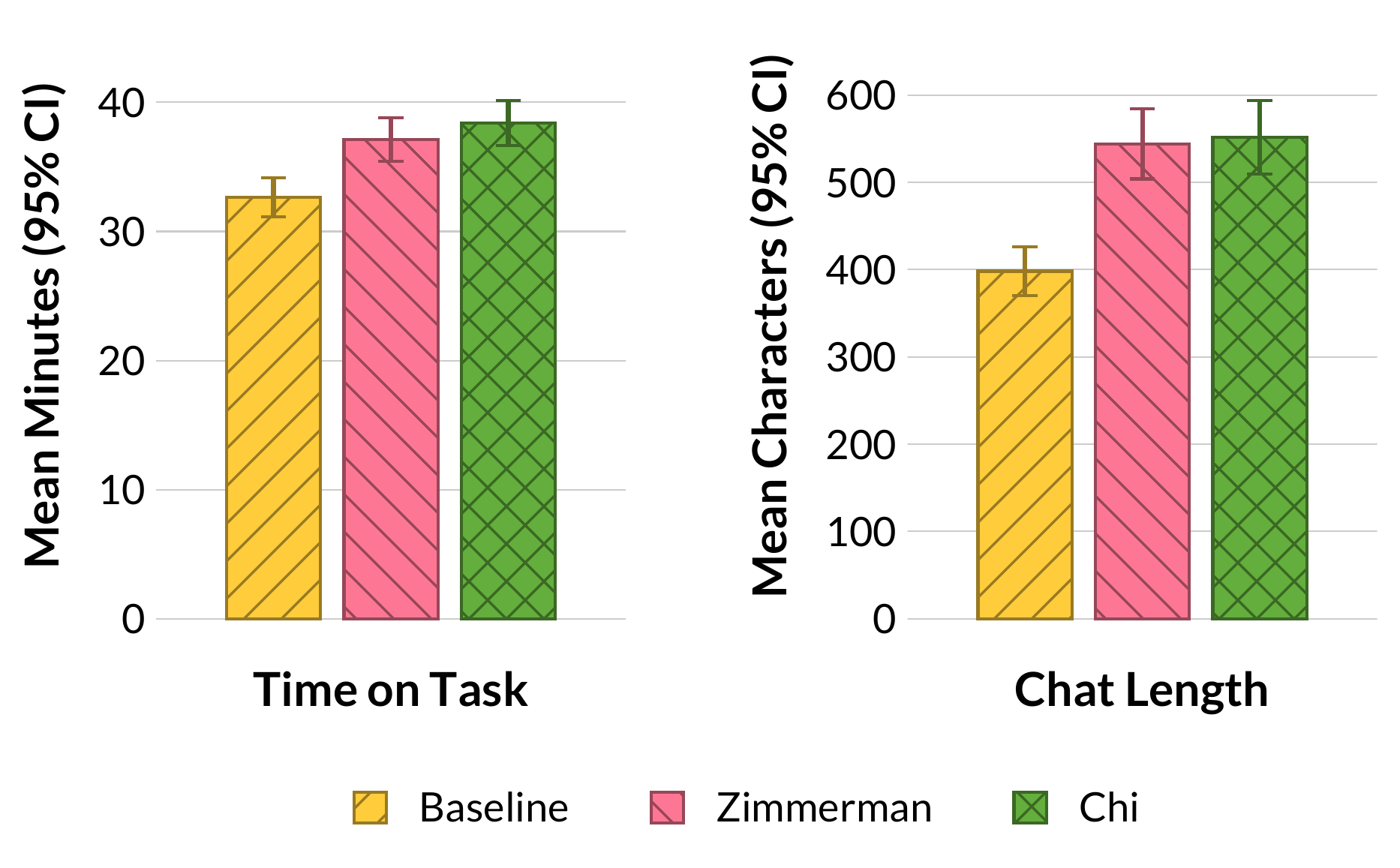
Theory-guided tutors elicited more engagement

ETH Zurich
Behavior changed
12.08.26
Takeaways
ICER 2026
15/16

Summary

What we built

  • Robust, privacy-conscious research platform
  • Battle-tested at scale and ready for further studies
ETH Zurich
Implications
12.08.26
Discussion
ICER 2026
16/16

Questions?

Maximilian Barth
Ente logoente.study